
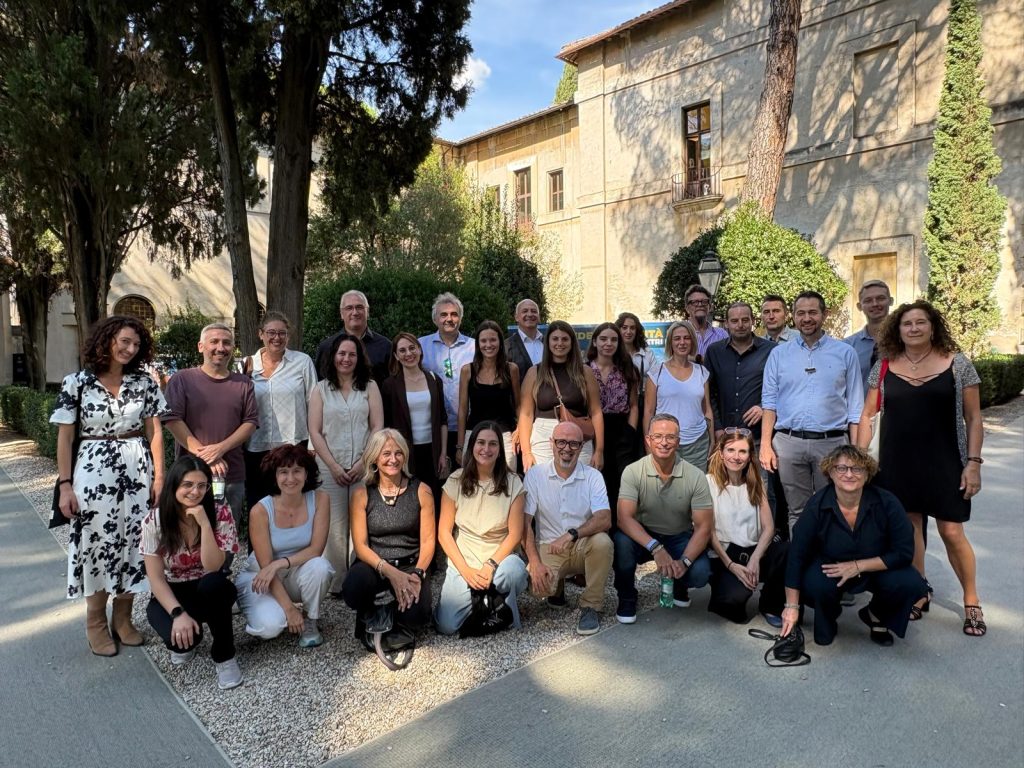
On 21-22 September 2026, partners of the VαMPiRE project gathered in Rome for a two-day scientific meeting dedicated to reviewing progress, addressing challenges, and defining the next steps towards the development of innovative Parkinson’s disease detection methods. The meeting brought together researchers, clinicians, biobanks, technology developers, and data scientists from across Europe to strengthen collaboration and accelerate the project’s objectives.
The Rome meeting was structured around three key goals: understanding the major scientific and technical challenges identified by each partner, discussing potential solutions through interdisciplinary collaboration, and translating these discussions into concrete action plans and follow-up activities.
Scientific Progress Across Multiple Research Areas
Throughout the meeting, consortium partners presented significant advances in several areas of the project, including the characterization of α-synuclein splice isoforms, extracellular vesicle research, transcriptomics, proteomics, biomarker discovery, artificial intelligence, and clinical recruitment.
Several presentations focused on improving the understanding of α-synuclein biology and its different splice isoforms, which are believed to play a key role in Parkinson’s disease progression. Researchers shared new findings on isoform production, aggregation behaviour, antibody development, and the detection of disease-related molecular species. These studies are helping the consortium refine analytical methods and identify the most promising approaches for future biomarker development.
Important progress was also reported in the analysis of neuronal-derived extracellular vesicles (NDEVs), a central component of the VαMPiRE strategy. Several partners presented complementary approaches for isolating, characterising, and analysing these vesicles to better understand how they may reflect disease-specific pathological processes occurring in the brain. Discussions highlighted the need for harmonized protocols and collaborative validation efforts across laboratories to ensure robust and reproducible results.
Advancing Clinical Recruitment and Cohort Development
Clinical partners reported substantial progress in patient recruitment and sample collection activities. The consortium has now reached an advanced stage of baseline recruitment across participating clinical centres, bringing the project closer to achieving one of its key milestones: the creation of a large and well-characterised European cohort of Parkinson’s disease and control participants.
The meeting also reviewed the ongoing collection of clinical data, biological samples, and follow-up information that will support the development of predictive models and disease stratification strategies in the coming years. Discussions emphasized the importance of maintaining participant engagement and ensuring high-quality data collection across all sites.
Artificial Intelligence and Data Integration
Another major topic was the integration of biological and clinical data through advanced computational methods. Consortium partners presented preliminary work on machine learning approaches aimed at identifying disease signatures and supporting patient stratification based on molecular and clinical information. These efforts are expected to play a crucial role in transforming complex datasets into clinically meaningful tools capable of improving diagnosis and prognosis in Parkinson’s disease.
From Challenges to Action
Beyond scientific presentations, a significant part of the meeting was devoted to brainstorming sessions and collaborative discussions. Partners worked together to identify current bottlenecks, prioritize research questions, and define practical solutions that can be implemented during the next phase of the project. The second day focused specifically on converting scientific discussions into actionable plans, assigning responsibilities, and establishing timelines for future activities.
A key outcome of the meeting was the reinforcement of cross-partner collaboration. Many of the scientific challenges identified require expertise from multiple disciplines, and the Rome discussions demonstrated the value of the consortium’s multidisciplinary approach in tackling complex questions related to Parkinson’s disease biomarkers.
Looking Ahead
As VαMPiRE enters its next phase, the consortium will continue expanding its clinical cohort, refining analytical methods, validating emerging biomarkers, and strengthening data integration strategies. The discussions held in Rome provided a clear roadmap for the months ahead and reaffirmed the consortium’s shared commitment to improving our understanding of Parkinson’s disease and accelerating the development of innovative diagnostic and prognostic tools.
The VαMPiRE consortium would like to thank all partners for their active participation, constructive discussions, and continued dedication to the project. Together, we are building the foundations for a new generation of tools that may contribute to earlier diagnosis, better patient stratification, and more personalized care for people living with Parkinson’s disease.