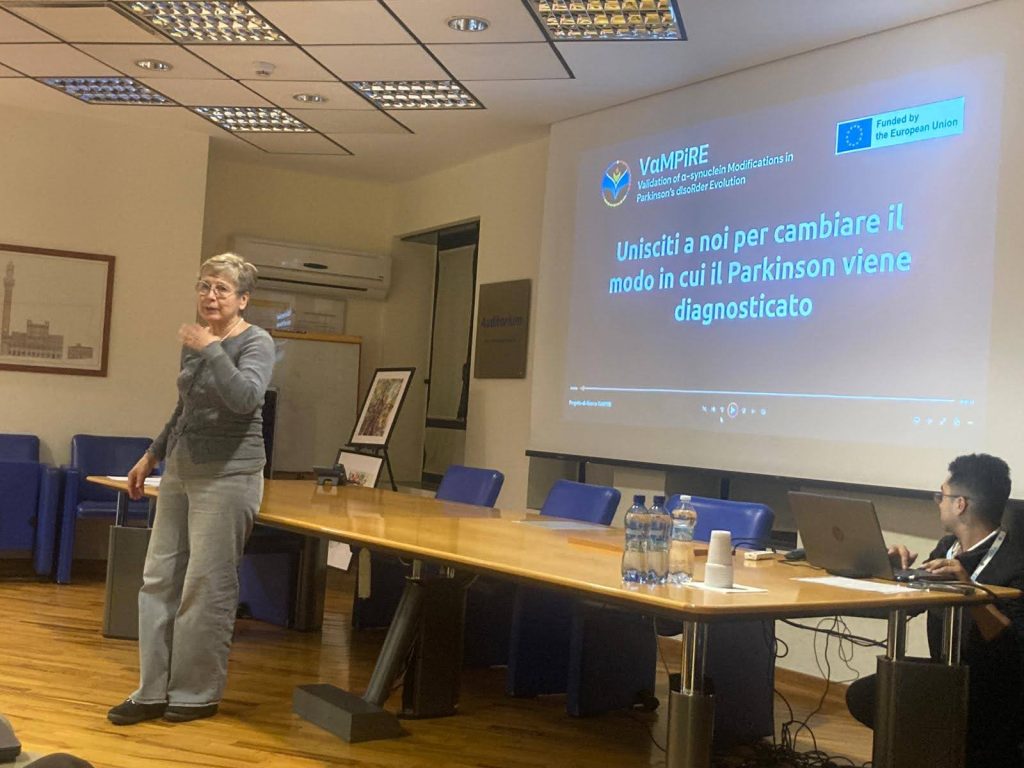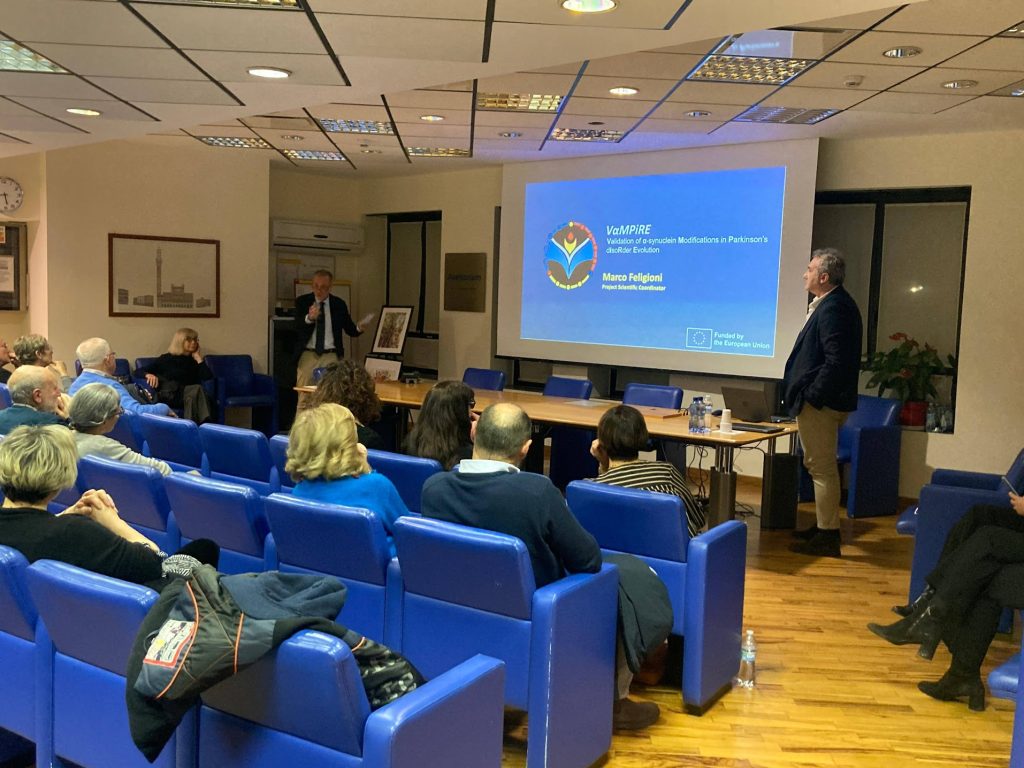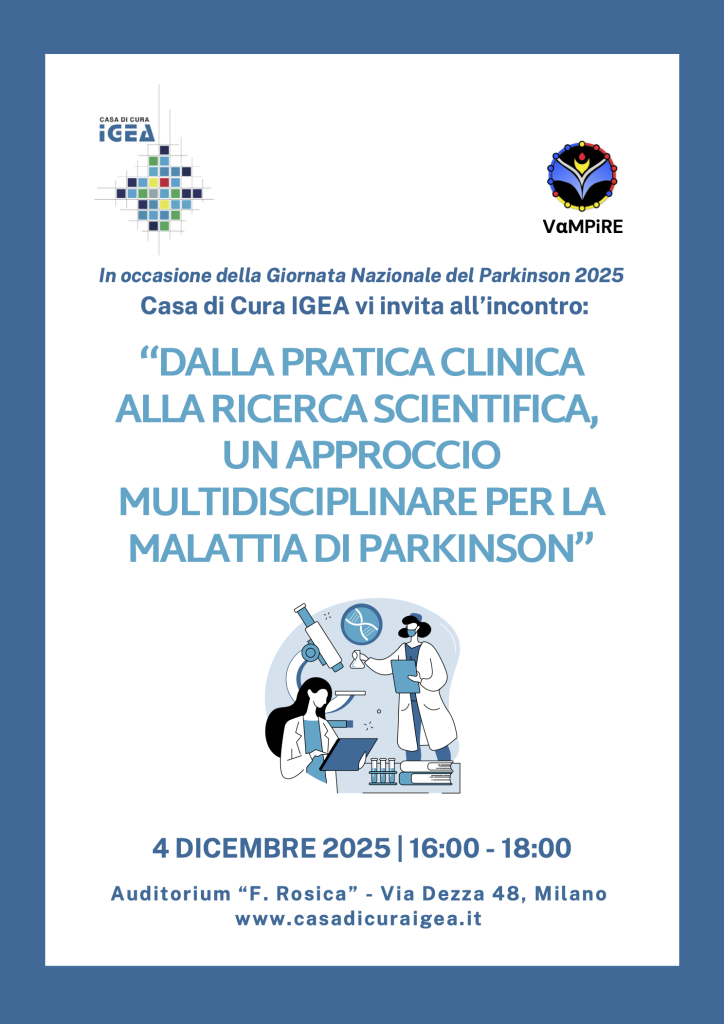
To mark International Parkinson’s Day on November 29, iGEA hosted an event titled From Clinical Practice to Scientific Research: A Multidisciplinary Approach to Parkinson’s Disease on December 4 at its premises in Milan.
Aiming to raise awareness about early diagnosis, disease management, and ongoing research in Parkinson’s disease, IGEA invited patients, caregivers, clinicians, and researchers to participate. More than 60 attendees, primarily patients and caregivers, joined to learn about symptoms, management strategies, and emerging treatments.
Professor Leonardo Pantoni, Scientific Director of Casa di Cura iGEA, opened the event with a warm welcome and an introduction to IGEA’s work. He was followed by Dr. V. Fetoni, who highlighted significant differences in how Parkinson’s disease affects men and women. Dr. F. Pesce then discussed potential neuropsychological issues observed in individuals with Parkinson’s disease. Dr. A. Antoniotti presented recent research on the importance of motor monitoring and tailored treatments. Rounding out the interdisciplinary session, Dr. P. Cappelletti explained the neurobiological basis of Parkinson’s disease, with a particular focus on α-synuclein.
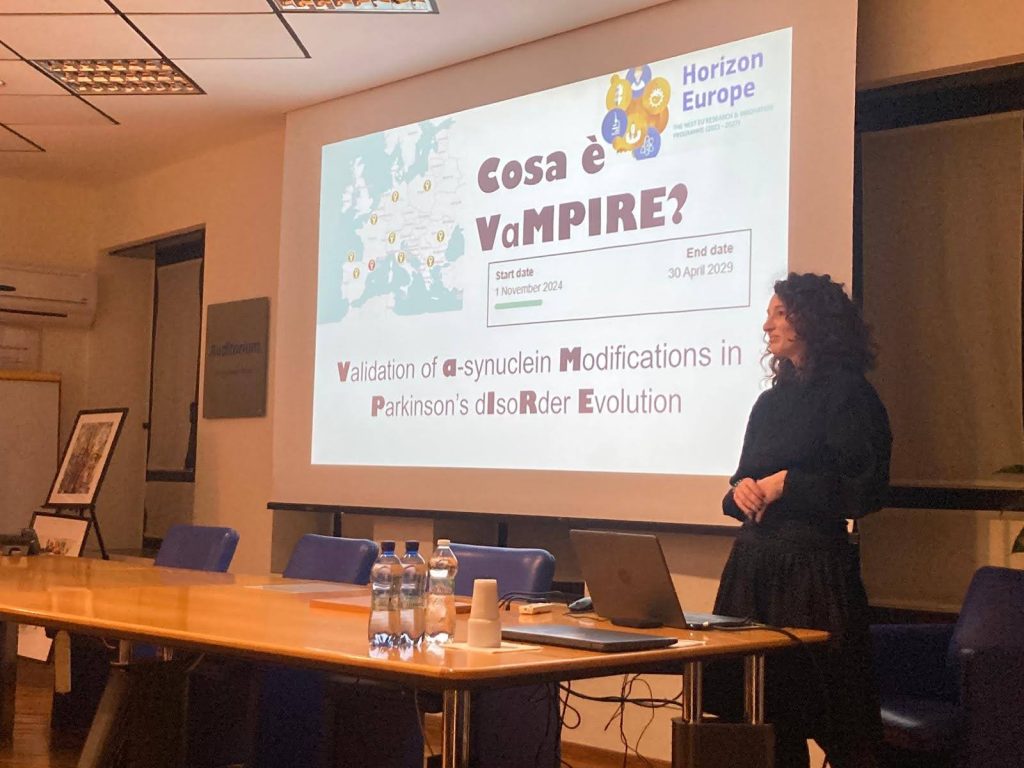
The scientific program continued with Dr. Marco Feligioni, who presented VaMPiRE, a joint research project investigating α-synuclein proteins and the consequences of their misfolding. He also introduced the consortium of leading European institutes and research centers involved in the project. Dr. Elda Judica followed with a discussion on the clinical implications of VaMPiRE and emphasized the importance of patient participation in research.
Several individuals living with Parkinson’s disease shared their personal stories and daily experiences with the condition. Many noted that they had observed symptoms 10 to 15 years before receiving a diagnosis, reinforcing the need for simple and non-invasive early screening tools. Morena Condò, who was diagnosed with Parkinson’s in 2019, shared her watercolour work, an interest she pursued following her diagnosis. Initially a way to process grief and depression, painting gradually became a meaningful creative outlet as she discovered her artistic talent.